

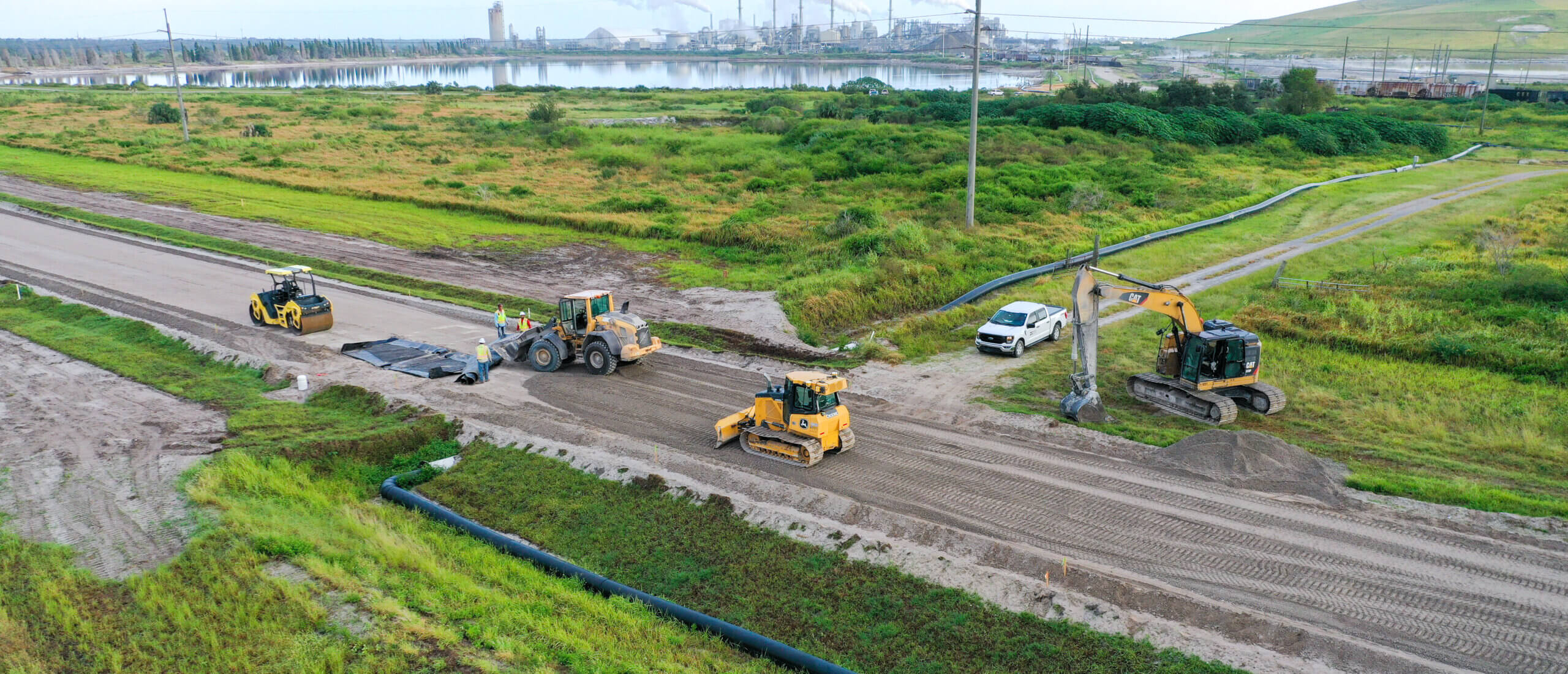
About Phosphogypsum (PG)
Phosphogypsum – also known as PG – is the byproduct created during the phosphate fertilizer manufacturing process. Across the globe, PG has many uses. It helps farmers grow crops, it’s used to expand forests and even to create artificial reefs. In fact, more than 55 beneficial uses of PG have been discovered. Despite this, PG still isn’t being used to its full potential in the United States.
Since the 1980s, PG has been stored in tall structures known as gypstacks. These stacks are heavily regulated and span acres. PG was first stacked nearly 50 years ago because there was a presumed risk of radioactivity. However, science has advanced since then. PG contains Naturally Occurring Radioactive Materials, more commonly known as NORM. We know now that the NORM in PG poses a very low risk to public safety – comparable to levels found in common household items including lightbulbs, granite countertops and watches. Florida has some of the lowest levels of NORM in the country.
PG: Sustainable Alternative Option for Road Base
Tim Townsend, PhD, leads a team of graduate students as part of a research project that began several years ago at the University of Florida Engineering School of Sustainable Infrastructure and Environment (ESSIE). His team routinely studies sustainable alternatives for road base other than lime rock. PG has been included in those studies because PG’s unique qualities have the potential to delay road breakdown over time.

Watch this Phosphate Innovation Initiative video to learn more about PG reuse and sustainability from Tim Townsend, PhD, Environmental Engineering Professor – University of Florida.
About the PG Pilot Road Project
Following Dr. Townsend’s research, the next step was to test the research in a real-world application — which is where Mosaic comes in.
Mosaic asked the EPA for permission to construct a test road at its New Wales site using PG as part of a road base — a project that could help the United States catch up to the rest of the world when it comes to turning this byproduct waste into productive use.
“We want people to know this is a safe and worthwhile resource, not a byproduct discarded as waste, and we are decades behind others who long ago realized just that,” said Sarah Fedorchuk, Mosaic Vice President — Government and Public Affairs.
The project received approval from the Environmental Protection Agency (EPA) in December 2024. Before that, the Florida Department of Transportation (FDOT) reported on the suitability of PG as road base. In 2025, The Fertilizer Institute also reported on the extensive (and growing) beneficial use of PG worldwide.
With the EPA’s approval, Mosaic is constructing a private road at the company’s New Wales facility using PG as a road base material between asphalt and road subgrade. The road is expected to be complete in October 2025.

The PG road base is located between asphalt and subgrade on a private road at Mosaic’s New Wales facility. Image Credit: University of Florida
The pilot road includes eight segments of road, with four segments containing 50 percent PG and 50 percent other road base materials, and four segments of controls. Approximately 1,200 tons of PG will be used in the project.
Soil, air and water surrounding the pilot road are monitored throughout construction of the road and will continue for at least 18 months after the road is complete. Results will be regularly shared with multiple regulatory agencies.

The test road includes four segments of PG test road with four controls on either side. Image Credit: University of Florida
Statement from The Mosaic Company on PG Pilot Road Project
“Trust the science. A host of regulatory partners are involved throughout the process. Federal regulations require the EPA to perform a rigorous scientific risk analysis when evaluating a request to reuse phosphogypsum (PG) beneficially. The impacts to human health and the environment are the primary focus of that analysis. At the end of the day, we welcome robust testing. We want people to know this is a safe and worthwhile resource, not byproduct discarded as waste, and we are decades behind others who long ago realized just that.”
Additional Resources
For more information on the project and PG reuse, click on the materials below:
About The Mosaic Company
The Mosaic Company (NYSE: MOS) is the world’s leading integrated producer of concentrated phosphate and potash—two of the three most important nutrients in agriculture. We employ more than 13,000 people in six countries to serve farmers all over the world. The people of Mosaic work with purpose to maximize efficiencies and minimize our environmental footprint. We strive to be a thoughtful and engaged neighbor, using our financial resources, expertise and innovative spirit to commit to good corporate citizenship. For more information, visit www.mosaicco.com
Media Kit
Our media kit includes downloadable, press-ready assets such as high-resolution photos, B-roll footage, and interviews.
For access to the media kit, please email media@mosaicco.com and include your deadline.
Media Kit Usage Guidelines: All assets are provided for editorial use only. Please credit The Mosaic Company when using photos, videos or interviews from our Media Kit.