

A Safe and Responsible Transition
Although Mosaic is closing the Plant City fertilizer facility, we’ve always recognized and accepted our responsibility to be a good neighbor. Since the commencement of closure activities, we have maintained a small team on site to secure the property and safely close it, including managing water onsite and closing the phosphogypsum stack.
Plant City Operations Timeline
1975: Operations begin.
2014: Mosaic obtains Plant City as part of the CF acquisition.
2017: The facility is idled.
2019: The decision is made to permanently close the site.
2024-2025: Plant decommissioning and area restoration begins.
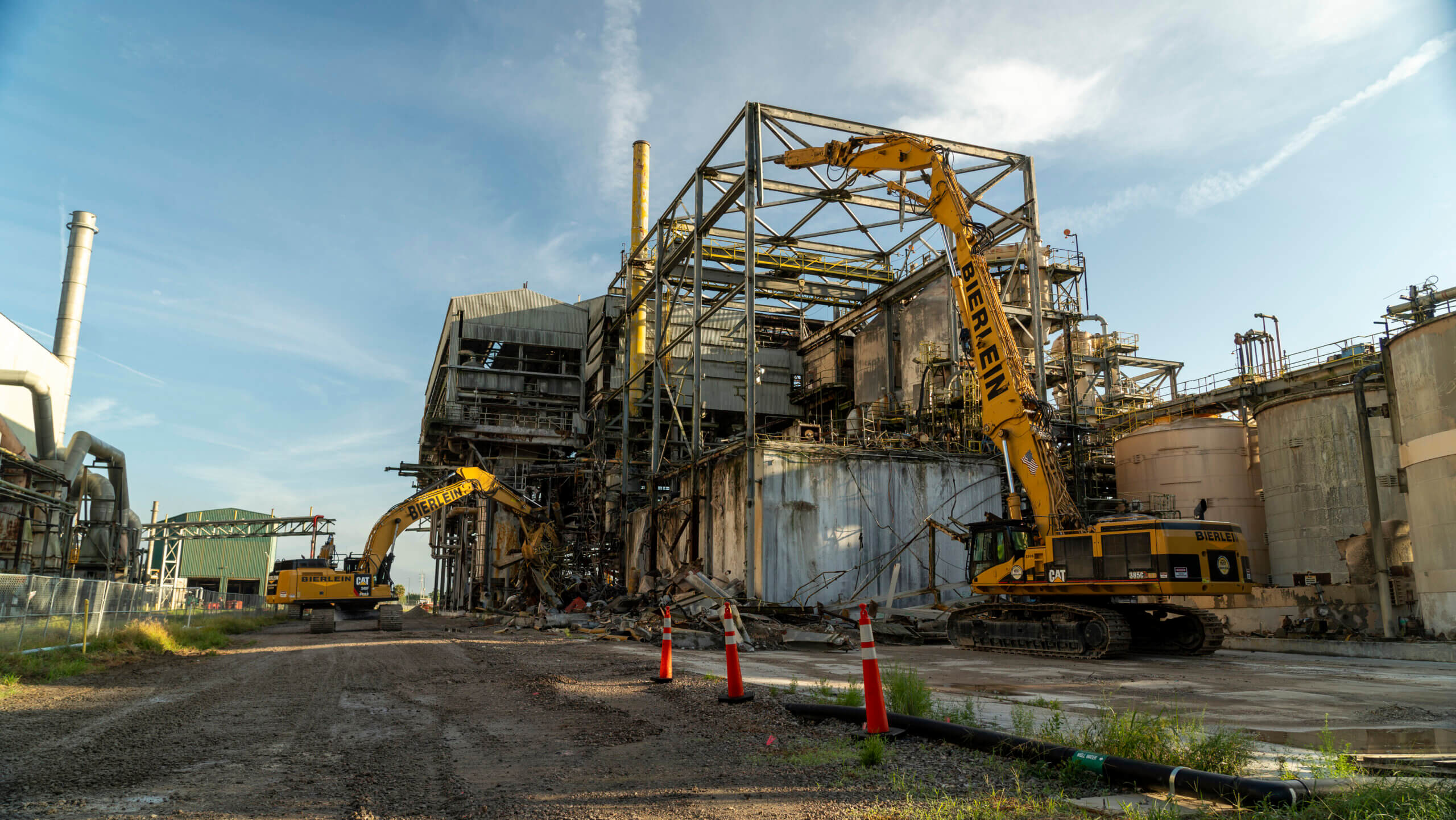
Cutting down an overhead bridge crane structure as part of early decommissioning at Plant City.
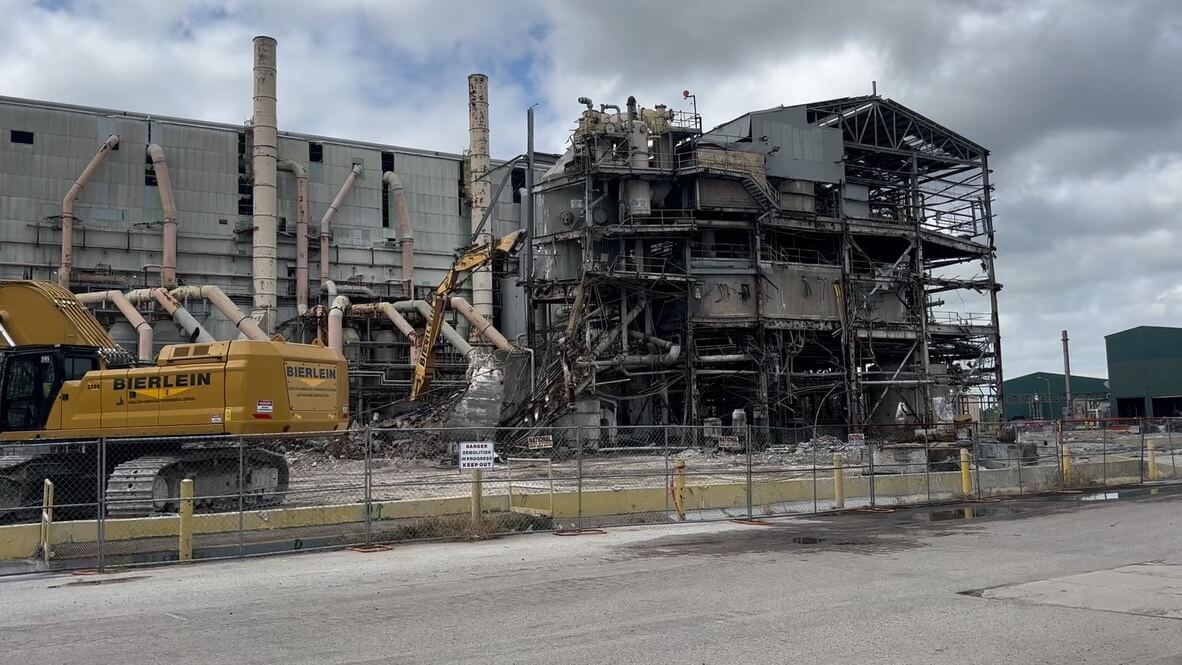
Plant decommissioning involved pushing a section over, also known as felling.

Post-decommissioning of Phos-Acid Plant B in Dec. 2024. Area restoration is in progress.
Because the plant’s operations have been discontinued, there is no consumption of water for production purposes. As a result, we have implemented stringent water management practices. This includes multiple water treatment systems to comply with all National Pollutant Discharge Elimination System (NPDES) standards. One of these treatments is reverse osmosis, which removes contaminants from the water through a membrane.
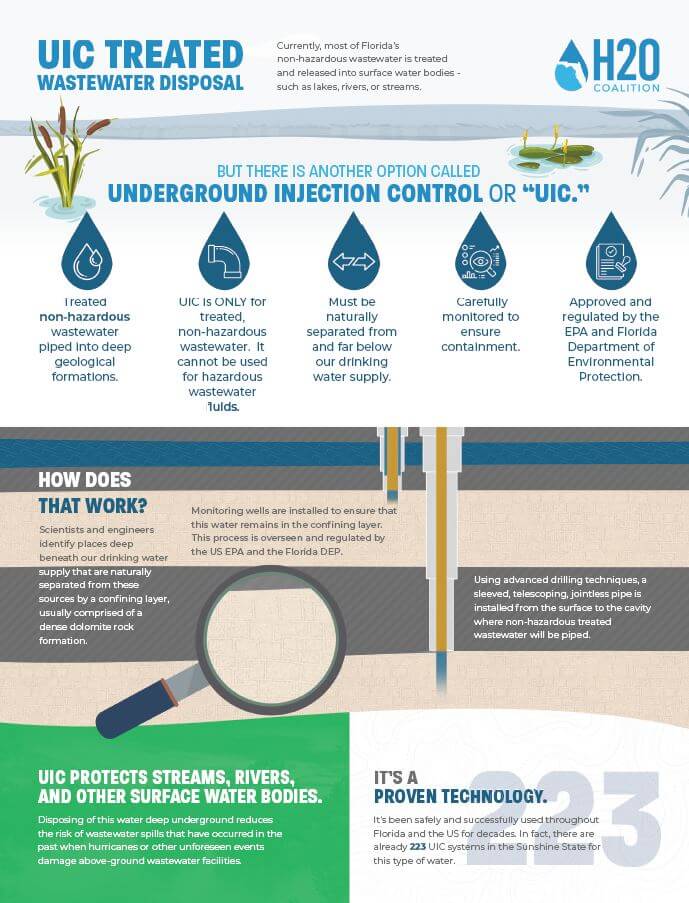
We are also actively pursuing innovative approaches to reduce surface water discharge. In 2023, Mosaic applied for a Class V Exploratory Underground Injection Well (UIC) Permit to the state. UIC technology has been in use in Florida since the 1960s to safely dispose of nonhazardous wastewater and excess stormwater into self-contained formations deep underground. This excess water is separated from drinking water sources by impermeable rock and clay formations. UIC well operations are subject to Environmental Protection Agency (EPA) standards. UIC technology serves as an environmentally friendly alternative to releasing nonhazardous water into surface water bodies, streams and rivers. Today, there are more than 200 UIC systems in place in Florida.
Watch the videos below to learn more about the UIC process, including an interview with well-known hydrologist and Professor Emeritus Dr. Tom Missimer, PhD, PG.


Throughout the closure process, we have regularly connected with neighbors to show our commitment to the community and our open approach to facility management. Engagement with the Plant City Community Advisory Panel (CAP) is a vital link between Mosaic and the surrounding community and will continue through the duration of the closure process to address any concerns.
Security is still active on our property, and our plans for complete closure are still progressing.
FAQs
Below are frequently asked questions about the UIC well and permitting process.
What type of well is being permitted?
The Plant City UIC permit is a Class V Exploratory Well Permit. This type of permit only allows “construction and testing” of the injection well to make sure it can safely inject treated water deep underground without affecting drinking water sources closer to the surface. After construction and testing are completed, which is estimated to take 18 to 21 months, Mosaic will need to apply for a Class I UIC permit to use the UIC well. This permit only allows non-hazardous fluids to be injected. Injection of hazardous waste is not permitted in the State of Florida.
Will the injected water mix with drinking water?
Extensive testing is performed during well construction to prove injected waters introduced into the well will not mix, or adversely influence, drinking water supplies. Injected water will be pumped more than 4,000 feet underground, well beneath any drinking water aquifers and is vertically separated by thick layers of impermeable rocks. In addition, the Florida Department of Environmental Protection (FDEP) requires a dual-zone monitoring well to be constructed for the sole purpose of confirming drinking water supplies are safeguarded.
What if the well stops working?
To prevent such an issue, Mosaic intends to perform extensive integrity testing during construction, which is reviewed and approved by the FDEP, to certify the well is operationally sound and protective of underground drinking water sources.
Can the treated water come back up?
If and when the exploratory well is permitted as a Class I well, it will be continuously monitored to confirm it is operating safely. The nearby dual-zone monitoring well will provide constant oversight to detect any potential movement of treated water outside of the permitted injection zone. If a failure were to occur, any vertical migration of treated water would be detected, allowing for immediate corrective actions. Additionally, Mosaic will provide financial assurance to the FDEP to safely plug the well, if needed.
How often do you check the overall health of the well?
Well performance is continuously monitored using real-time data collection systems. If the well is converted to a Class I well, detailed Mechanical Integrity Tests (MITs) would be performed every five years and FDEP would conduct a thorough review of all operational and water quality data prior to any permit renewal. Other inspections may be required periodically under regulatory guidelines to confirm the well remains safe and operational.
If I want to review well reports, where do I find those? Are they public record?
During well drilling and testing, weekly reports will be provided to FDEP. All the submitted reports and test results will be available to the public through FDEP’s online portal.
Is the drilling of the well loud?
The drilling and testing of the well will produce some noise, but it is significantly reduced compared to traditional methods. The project uses a highly advanced electric drill rig, known as an ‘E-Rig,’ which is quieter than conventional drill rigs.
Once complete, is the above ground portion of the well unsightly, or overly large?
Will the well disrupt Florida geology? Could it cause a void?
No. The targeted injection zone consists of deep, stable rock formations well below any drinking water aquifers. Extensive testing during well construction will verify the integrity of the impermeable rock layers to confirm that injected water remains insolated below the overlying geologic units. In addition, FDEP requires that the water’s chemistry be compatible with the surrounding rock formations to prevent void or cavity formation.
Why spend millions of dollars drilling a well when you can just treat and release the water through designated outfalls?
Surface discharge of treated water will continue to be used where conditions allow, but a deep well will provide an additional water management tool in the event of hurricanes, flooding or downstream capacity limitations which make surface water discharges impractical. UIC is a proven, regulated method that provides safe, long-term management of treated water without impacting drinking water supplies. This investment adds operational resilience to our water management strategy.
Community Involvement
Throughout the closure and moving forward, we are still proud to champion our partnerships in the Plant City community. In 2024, Mosaic donated $18,000 to United Food Bank and Services in Plant City to fund the organization’s food pantry. The funds were also used for a program in Salesforce to help easily reach and manage clientele and their needs during times of crises. Since 2022, Mosaic has supported the food bank’s Feeding Our Legacy Program, which helps seniors facing food insecurity in Bealsville and surrounding communities.
Additionally, the food bank is a longtime beneficiary of our Goals for Food program with the Tampa Bay Lightning. Since 2013, Mosaic donates $1,000 for every goal and $1,500 for every hat trick scored by the Lightning to food banks in our operating area, including United Food Bank and Services. In 2024, the food bank received $12,500 from the partnership. Watch the video below to learn more.
United Food Bank of Plant City

We’re also supporting the next generation of farmers through the purchase of students’ 4H and FFA projects at the Florida Strawberry Festival. The meat from these projects is then donated back to food banks and other local nonprofits.

In May 2025, Mosaic volunteers worked at United Food Bank’s new facility, packing Feeding Our Legacy kits for senior citizens and Feeding Our Future kits for students as part of a 2025 Mosaic Cares Day across our global operations.
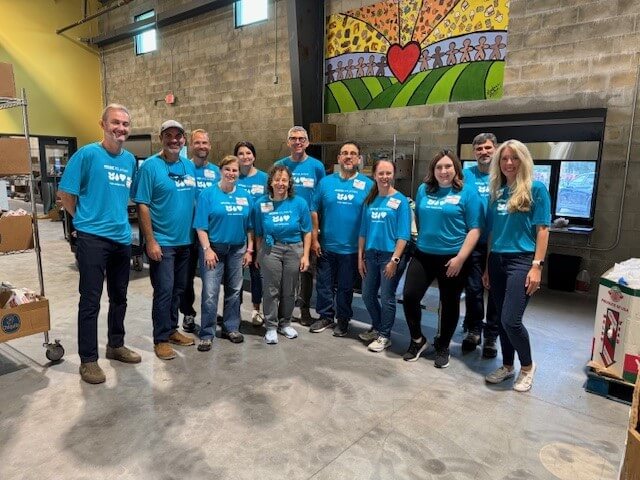
Mosaic employee volunteers packed hundreds of kits for students and seniors.
Additional Resources
Read the mailer below we sent out regarding the closure of the Plant City facility or review the facts on UIC technology.
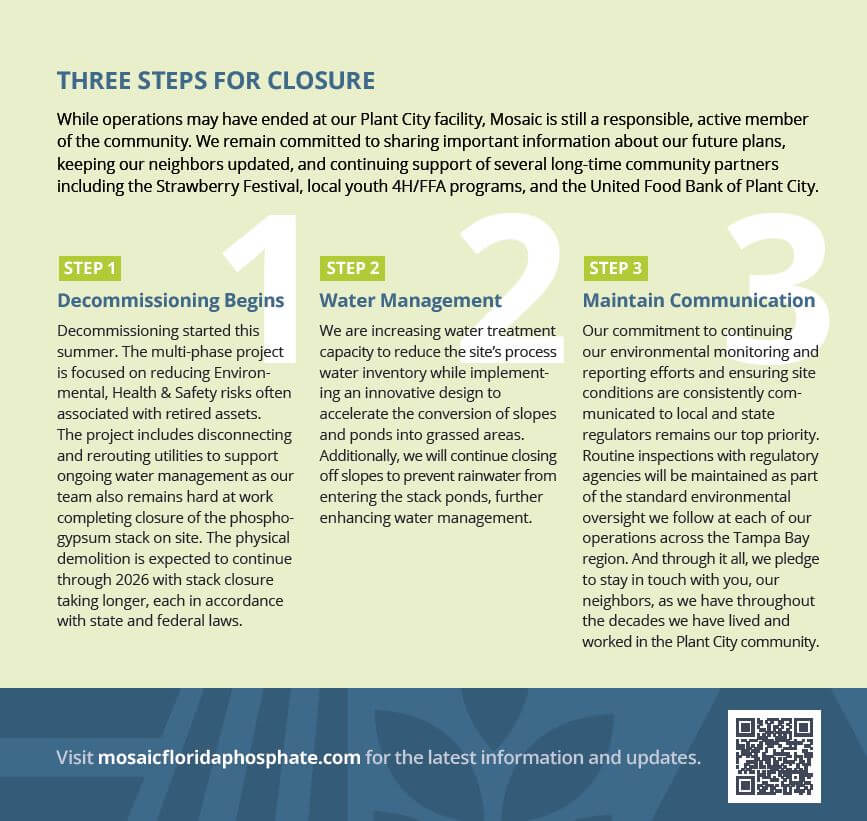
We will continue to update this webpage with information as closure efforts continue.